

If a piece of tech can save me tedious hours of organizing data or doing repetitive work, I’m interested. I manage a short-term rental remotely, a long-term rental in town, and I used to run a tiny house Airbnb in my backyard, so over the years I’ve tested a lot of tools and landed on a streamlined system that uses technology where it genuinely helps. In a lot of cases it’s faster and more accurate than I could ever be, even with endless hours to pore over the data, and I’m willing to pay for that quality.
I’ve got enough on my plate between my job, my family, and my life, so I really value my time. The real estate side is meant to stay a side quest: something that supplements my income and diversifies my portfolio without eating up mental space I don’t have. I’m also not a tech-for-everything person. I’m actually pretty selective. I have no patience for bad design, I LOVE efficiency, but I need tools that reduce friction, not tools that hand me twelve dashboards to check. I also have no illusion that you can fully automate yourself out of any involvement, ever. Some things need a human in the loop, and most machines, no matter how good, still benefit from some oversight.
So here’s the tech that helps me run my rental business. Every tool either removes tedium or improves accuracy, and I’ll show you exactly where I still step in as a human. I hope a few of these help set you up for 2026.
Disclaimer: this is just my thought process based on what I’ve learned. I’m not a lawyer, and I can’t give tax, legal, or financial advice, so please treat this as a starting point for your own research and consult an actual expert about your situation.
The Financials
It makes the most sense to let software handle the tedious stuff, and financials are the obvious place to start. This is where I track expenses, attach receipts so I have documentation for tax deductions, and pull clean monthly financial reports. Good analysis needs good data first, and having all of that stay clean in the background is what makes it work.
Way back at the beginning, with my first tiny house setup, I just used a spreadsheet. It worked, but it was a little too manual, and it clearly wasn’t going to scale past one property.
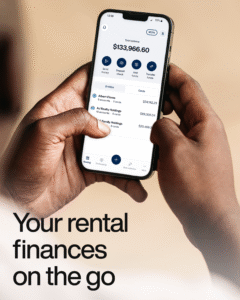
Here’s what I use for it now, and it all happens in the background. Before this, I’d have stretches where I fell behind and then dreaded opening a list of 30 transactions to hunt down each receipt and attach it one by one. Keeping it organized on its own is the whole point, and if you’ve got multiple properties and a lot of line items, that alone saves real time.
As for the parts only I can do: the software handles the inputs and even some nice-looking outputs, but the judgment is still mine. The big-picture thinking, the strategy, the tax optimization, all of that is specific to my situation and goals. That’s exactly why I like offloading the boring bookkeeping, so I have more brainspace for the things only I can do.
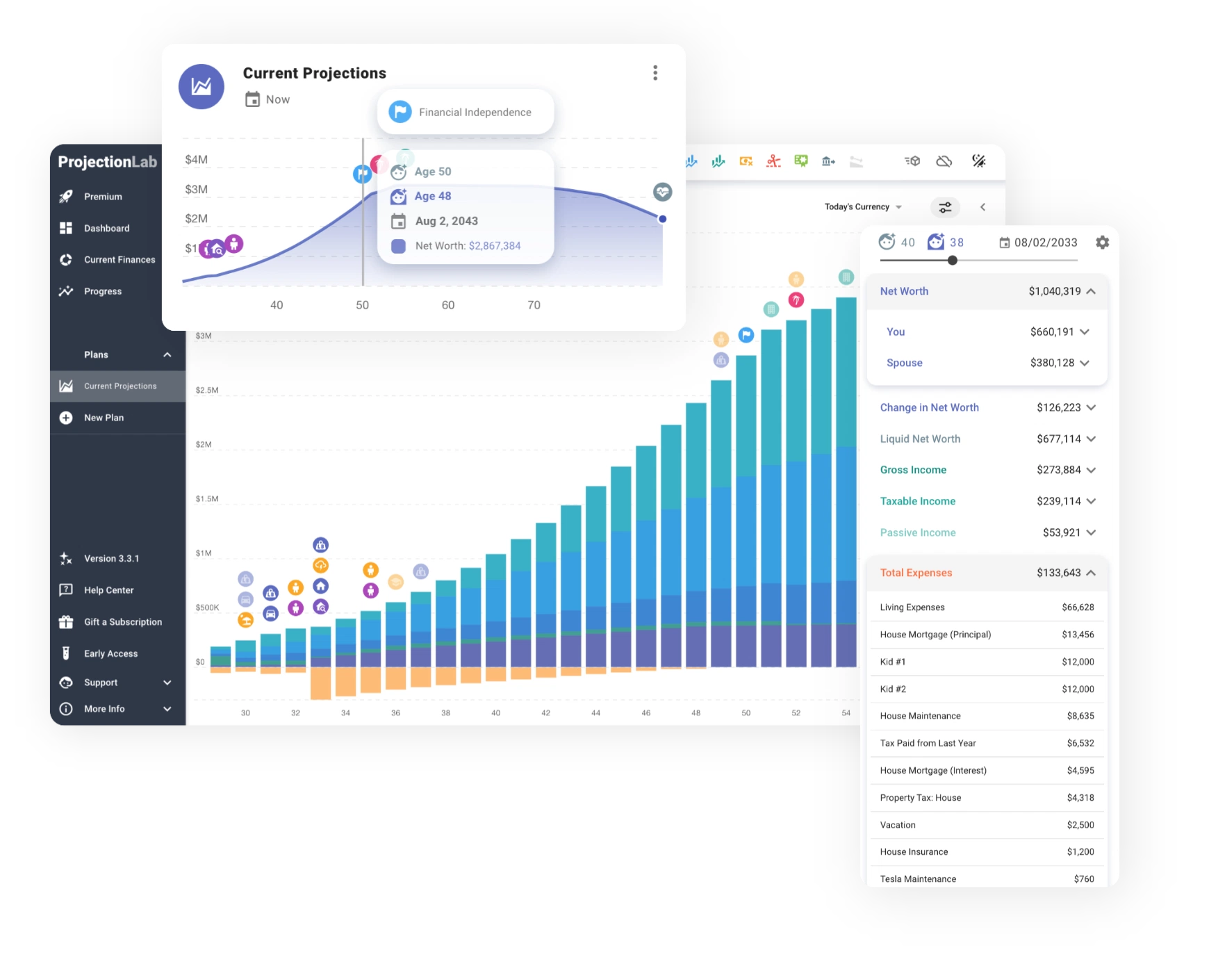
For the long-term planning side, I use Projection Lab to visualize how everything fits together, the real estate alongside all my other financial pieces like income, YouTube, retirement, and the kids. It’s great for tracking progress and running different “what if” scenarios. I liked it enough to buy the lifetime plan. It’s still just a tool, though. I’m the one setting the goals, coming up with the ideas, and deciding what to actually do.
Operations
If you run a short-term rental, you know how many moving pieces there are: restocking consumables, changing HVAC filters, making sure the cleaning gets done, and staying on top of those easy-to-forget annual items. It adds up.
I’ve set things up so the “remembering” lives in a dashboard I built in ClickUp.
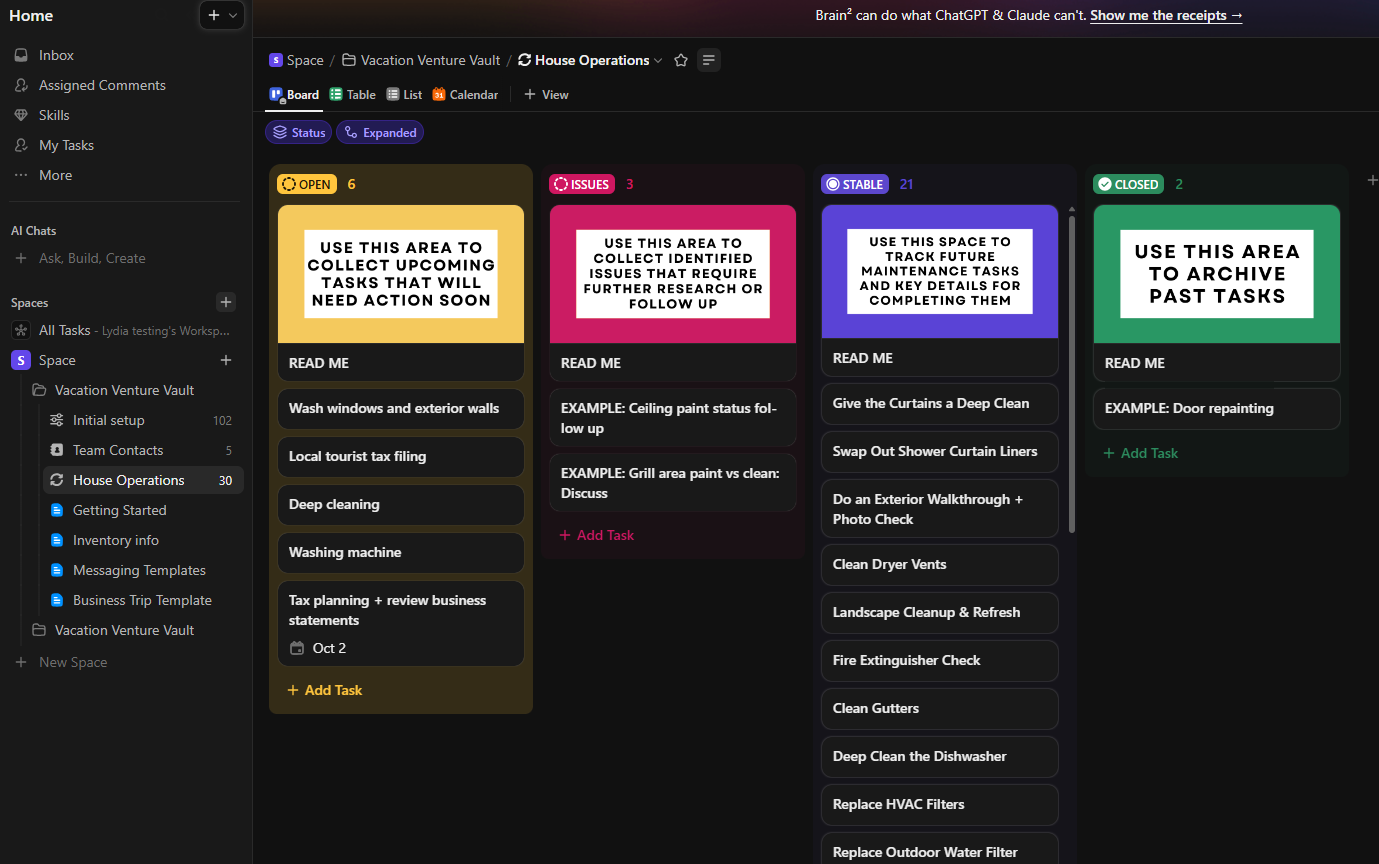
It holds my inventory notes (nothing obsessive, I just do an annual refresh) and the routine maintenance items, each with a scheduled push notification so I don’t even have to open the dashboard. I’ll just get an email reminding me that the water filter outside the house probably needs swapping the next time the handyman comes by. You’re welcome to download mine or build your own to fit how you think. I know there are subscription tools that do this too, I just didn’t love the setup phase of bending a generic system into what I wanted, since I already knew exactly how I wanted everything tracked. Either way, I’d recommend having some single source of truth instead of a pile of random post-its and scattered to-do lists.
The tasks themselves? Mostly hired out. The tech reduces my mental load, the delegation reduces the physical load, and I don’t live there anyway. Those two pieces together are the machine that runs most of my operations.
My part is operating that machine: reviewing what’s coming up and acting on it, like calling someone to look at the fireplace. I can’t be 100% hands-off, and I wouldn’t want to be, since I need to materially participate to qualify for the tax benefits (I keep a simple log of that time with Toggl). Even so, I’ve gotten my involvement down to a minimum from a distance.
Guest Communication
I use Lodgify for the templated messages that go out to every guest, since a lot of it gets repetitive. I still tweak them, though. When I know I’ll be unavailable for a stretch, I can also fully automate the messaging, which is a nice option to have.
Communication is really where the how-much-to-automate question comes down to personal preference. Technically you could run most of it on auto-messages, or even hit an AI button and fire off a reply without thinking too hard. That’s a totally valid choice. It’s just not me. There’s a level of warmth I don’t think a machine can fully replicate yet, so this is one area where I’ve intentionally kept a human touch. A lot of one-off messages can’t really be anticipated anyway.
Not long ago a guest who’d booked a longer stay asked for some flexibility on the tail end of their trip. I could have just pointed to our standard cancellation policy and left it there, but it felt like a reasonable ask, so I took the time to actually consider a partial refund. Most of the time I do stick to our standard terms, but some situations really are more negotiable, and thinking through a response for those specific circumstances is exactly the kind of thing I’d rather handle myself.
I do keep a bank of templated responses for the common questions, but even now, four years in, I still run into new scenarios. So if you’re just starting out, don’t feel discouraged that everything isn’t magically automated yet. Mine isn’t either.
Marketing and Direct Bookings
We set up a direct booking website that cross-posts to Google Vacation Rentals, which helps us show up in front of more travelers. To be honest, a lot of the time it’s people who first found us on Vrbo or Airbnb and then looked us up off-platform. That makes for some awkward moments, because you can’t really steer them to the direct booking, and you don’t have their contact info unless they reach out on their own.
This has never been our primary source of bookings, but it’s added some revenue and I think it’s been worth it. That side runs automatically through the same tool I use for guest messaging.
On the human side: early on we had all these ideas about an Instagram page for the house, an email list, blog content to drive traffic. We did the basics and not much more. There’s a real simplicity to just relying on already-reviewed guests through the established platforms. I think the bigger marketing push makes more sense if you have a truly unique place, a lot of repeat guests, or high enough revenue that the time and money investment pays off.
If you do want an email list, here’s the one I use. I think the basic plan is free up to 10,000 subscribers, so if all you’re collecting is guest emails, that’s more than enough.
Pricing
Pricing is almost entirely software for me, running dynamic pricing and pulling market data. I try to review it monthly, though I’ll admit I slipped over the holidays. I use PriceLabs and AirDNA, both excellent.
A few reasons software wins here:
- It pulls market data far more accurately than manually scraping comparable listings in your area.
- Dynamic pricing reacts faster than most of us can. I did once talk to a host with such sharp hyperlocal knowledge that she didn’t find it useful, but most of us aren’t like that, and plenty of us don’t even live near our rentals.
- It takes the emotion out of pricing. Set your base, your minimum, and a few rules, then let it run.
My input looks a lot like it does with financials. The software gathers and presents the data in a digestible way, but I’m the one reviewing it, checking competitors, reading market trends, and deciding whether to change anything. Usually that’s tweaking my base price or adjusting minimum-stay limits around, say, Christmas. More recently, Airbnb moved to a host-only fee for those of us on property management software, so I had to adjust my pricing to account for it.
Privacy and Data Removal
Google your own name and city and you’ll probably turn up your full address, your family members, old addresses, a shocking amount of data. I use Aura to automatically screen for that and submit removal requests, all in the background. You could technically do this yourself, but would you want to? Software does it with far less effort and probably more thoroughly than I ever would.
For me it’s mostly peace of mind. When you’re hosting on Airbnb, the idea that a guest could dig up all your personal info is a little unsettling.
The human involvement here is almost nothing. Once in a while it asks me to click a button to finish a removal, but otherwise it just runs. It’s worked through a whole pile of requests and it’s still going.
Keeping an Eye on the Property from Afar
This category is heavy on tech and light on me. My setup:
- Minut (noise and occupancy monitoring)
- Yale keypad
- Ring cameras
- Ecobee thermostat
- Rachio smart irrigation
We get an alert when something seems off, and then it’s on us to decide whether it actually needs action. A common one is the noise sensor going off simply because people are chatting in the living room. We can host up to 12, so it doesn’t take much to cross a decibel threshold. When that happens, we’ll check the outdoor cameras to gauge how loud it really is from outside and whether it’s genuinely bothering anyone.
Rent Collection
For my long-term rental, rent collection is fully automated through the same banking platform I use for everything else. If a payment ever needed follow-up, that part would fall to me. The software can send reminders, but I’d still have to decide what to do next. Fingers crossed I never have to find out.
A Couple of Honorable Mentions
Two things that didn’t make the official list: AI chatbots (I lean on them for slogging through long insurance policies and terms and conditions for a specific situation), and plain old Google Sheets and Docs. They feel too basic to include, but I use them almost daily, and I think sometimes the best tech is the simplest and easiest to fold into what you already do. The best return on your time and money isn’t always the fanciest tool.
That’s my stack. For me, the sweet spot was never automating everything. It’s using tech for the boring 70% so I can spend my energy on the 30% that actually moves the needle, or that I just enjoy doing.
What’s in your tech stack, and where do you still insist on doing things by hand?
Drop us a comment below! 🙂
